Lower Back Pain Treatment Coventry
I have a very simply pricing structure for my lower back massages:
1hr £60
1.5hrs (full body) £75
Package Buy - 5 for price of 4 (valid for 12 months)
Lower Back Pain Treatment
Lower back pain is the single most common reason clients walk through my door at Massage Therapy Coventry, and for good reason – it's debilitating, frustrating, and often feels like it's never going to improve. Whether you're a tradesperson who's spent twenty years bending and lifting on building sites across Coventry, an office worker whose back starts aching halfway through the day at your desk, or someone whose lower back has gradually stiffened with age, that constant dull ache or sharp catch when you move affects everything from your work performance to your sleep quality and your mood.
The good news is that much lower back pain has a significant muscular component that responds extremely well to targeted
deep tissue massage treatment. While massage won't fix structural problems like herniated discs or advanced arthritis, it's highly effective for the muscular tension, trigger points, and compensatory patterns that cause the majority of chronic lower back discomfort. Understanding what's actually causing your particular pattern of pain is the first step toward finding effective relief.
Why Lower Back Pain Develops
Your lower back bears tremendous mechanical load during almost every movement you make, whether that's bending to lift materials on a building site, sitting at a desk for eight hours, or simply standing and walking throughout the day. The lumbar spine and the muscles supporting it – primarily the erector spinae group running along your spine, the quadratus lumborum on each side of your lower back, and the multifidus muscles deeper within – work constantly to stabilize your torso and allow movement. When these muscles are used repetitively in the same patterns, held in sustained positions, or required to work harder because of poor posture or weak core stability, they develop chronic tension and trigger points that create persistent pain.
For manual workers and tradespeople, the physical demands are obvious and relentless. If you're a builder, you're bending hundreds of times a day to lift blocks, bags of cement, timber, or tools. Electricians and plumbers work in awkward positions under sinks, in ceiling spaces, or bent over installations. Joiners spend hours leaning over workbenches. Warehouse workers lift and carry throughout their shifts. Mechanics work bent over engine bays or lying under vehicles. Each of these activities loads the lower back muscles asymmetrically and repeatedly, and over months and years, chronic tension accumulates in specific patterns related to your particular work movements.
The biomechanics are straightforward but important to understand. When you bend forward repeatedly, your erector spinae muscles lengthen under load to control the movement, then contract forcefully to bring you back upright. Do this hundreds of times a day for years, and these muscles develop areas of chronic shortening and trigger points – specific tight spots that remain contracted even when you're resting. These trigger points refer pain across the lower back and can make the entire region feel tight and uncomfortable. The quadratus lumborum, which runs from your lowest rib to your pelvis on each side, becomes particularly problematic for people who work in asymmetrical positions or carry loads on one side more than the other.
Office workers develop lower back pain through an entirely different mechanism but with similar results. Sitting for prolonged periods with your spine in flexion – the typical rounded lower back position most people adopt at desks – keeps the erector spinae muscles in a lengthened, stretched position for hours. This sustained stretch weakens these muscles and causes them to develop chronic tension as they struggle to support your posture. The hip flexors shorten from constant sitting, which tilts the pelvis forward and increases the load on the lower back muscles. The result is that dull, achy discomfort that starts a few hours into your workday and gradually worsens as the day progresses.
Lower Back Pain Treatment near me
If you are looking for a lower back pain treatment near me and live in or around Coventry get in touch today.
How Deep Tissue Massage Treats Lower Back Pain
Deep tissue massage addresses lower back pain by systematically releasing the chronic tension and trigger points in the muscles causing your discomfort. Unlike painkillers which simply mask symptoms, or exercises which can be difficult to do when you're in pain, massage directly treats the tight tissue that's generating the pain signals. The treatment works through several mechanisms that combine to provide both immediate relief and longer-term improvement.
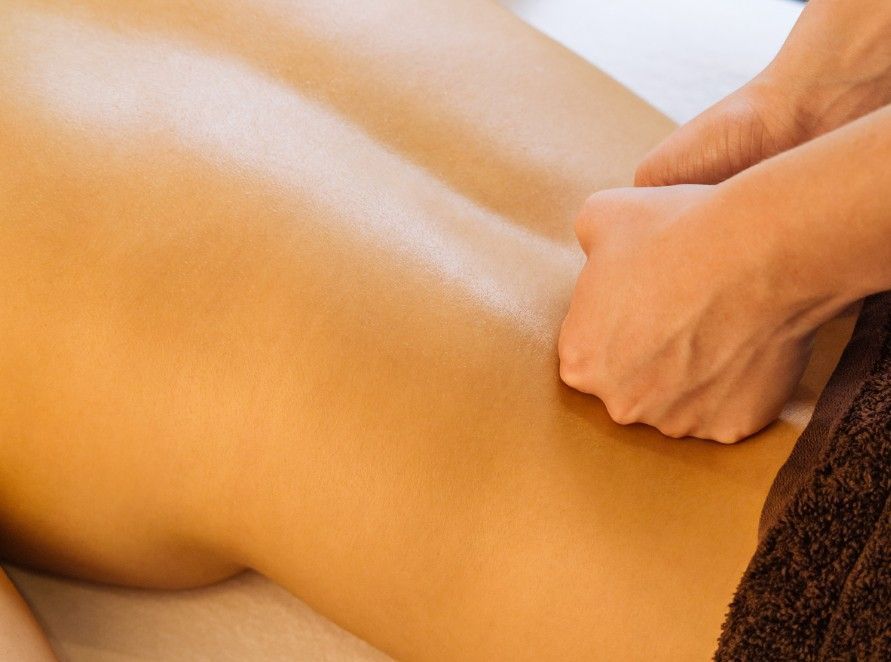
The primary effect is the mechanical release of chronically tight muscle fibres and trigger points. Using slow, deep pressure applied along the length of the erector spinae muscles, across the quadratus lumborum, and into the gluteal muscles which often contribute to lower back pain, I work systematically to release areas of chronic contraction. When pressure is applied to a trigger point and held for 30-60 seconds, the tight muscle fibres release – you'll often feel this as a sudden easing of tension or a spreading warmth as blood flow returns to the area. This release is partly mechanical – physically stretching the tight fibres – and partly neurological, as the sustained pressure triggers a reflex that causes the muscle to relax.
Secondly, deep tissue work improves blood flow to the affected area. Chronically tight muscles have reduced circulation because the contracted fibres compress the small blood vessels running through them. This reduced blood flow means less oxygen and nutrients reach the tissue, and metabolic waste products accumulate, contributing to pain and inflammation. By releasing the tension, proper circulation returns, accelerating healing and reducing inflammation naturally. This is why many clients feel warmth spreading through their lower back during treatment – it's fresh blood flow returning to tissue that's been starved of circulation.
The treatment also addresses fascial restrictions. Fascia is the connective tissue that surrounds and connects muscles throughout your body. When muscles are chronically tight or have been injured, the fascia becomes restricted and can bind muscles together, limiting movement and creating additional pain. Myofascial release techniques specifically target this connective tissue, using sustained pressure and stretching to restore mobility. For lower back pain, releasing fascial restrictions between the layers of back muscles and between the back muscles and the thoracolumbar fascia (the thick sheet of connective tissue covering the lower back) often provides significant relief.
Caitlin
Treatment Approach for Different Causes
The specific techniques and focus areas I use depend on what's causing your lower back pain. During your first session, we'll discuss your work, the movements that aggravate your symptoms, when the pain started, and what makes it better or worse. This information, combined with palpation assessment where I feel the muscles to identify areas of chronic tightness and trigger points, allows me to identify your particular pattern and tailor treatment accordingly.
For manual workers and tradespeople whose pain comes from repetitive bending and lifting, treatment typically focuses heavily on the erector spinae muscles along the spine and the quadratus lumborum on each side. These are the muscles doing the majority of the work during lifting and bending, and they develop very specific patterns of trigger points. I'll work systematically along the length of these muscles, releasing trigger points and areas of chronic tightness. Treatment often extends into the gluteal muscles and the hip flexors, because these muscle groups work together to control movement, and tightness in one area affects the others. If you work asymmetrically – perhaps carrying tools on one side or working with one arm more than the other – one side of your back will typically be tighter than the other, and treatment addresses this imbalance.
Office workers with postural lower back pain need a slightly different approach. The erector spinae muscles need treatment, but equally important is addressing the shortened hip flexors that develop from prolonged sitting. These muscles attach to the lumbar spine and, when tight, pull the pelvis into an anterior tilt which increases the curve in the lower back and overloads the erector spinae. Treatment includes work on the psoas and iliacus muscles (the deep hip flexors) which helps restore more neutral pelvic alignment and reduces the load on the back muscles. I'll also typically work on the hamstrings, because tight hamstrings pull the pelvis into a posterior tilt when you're sitting, contributing to the rounded lower back position that creates pain.
For older adults managing age-related lower back stiffness, the approach is gentler but follows similar principles. The pressure is adapted to your comfort level, and treatment might be combined with softer techniques where very deep pressure would be uncomfortable. The focus is on maintaining mobility, reducing chronic tension, and keeping the muscles and connective tissue as healthy as possible. Many retired clients find that regular maintenance sessions help them stay active and comfortable rather than gradually becoming more limited by stiffness and pain.
What Happens During Your Treatment Session
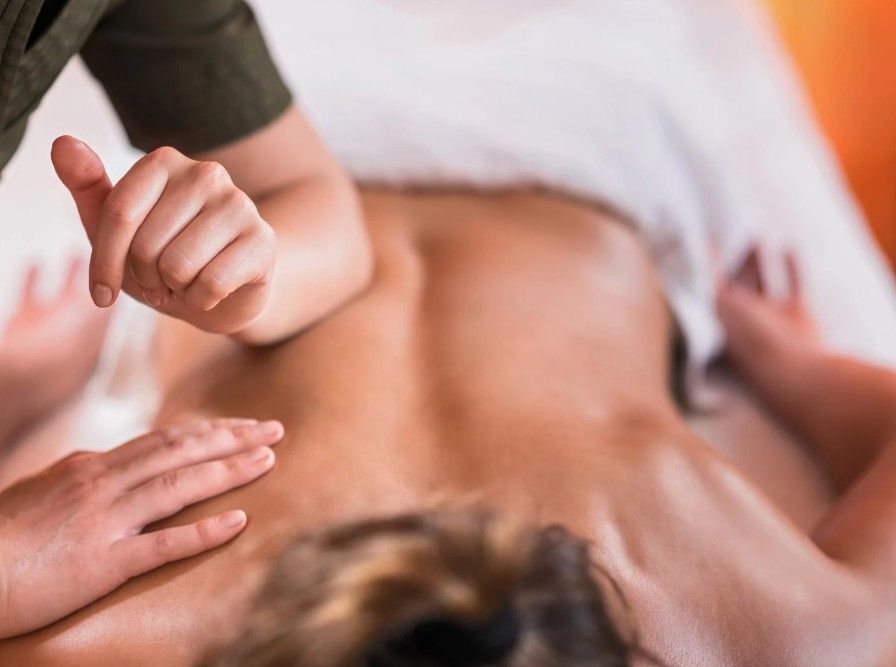
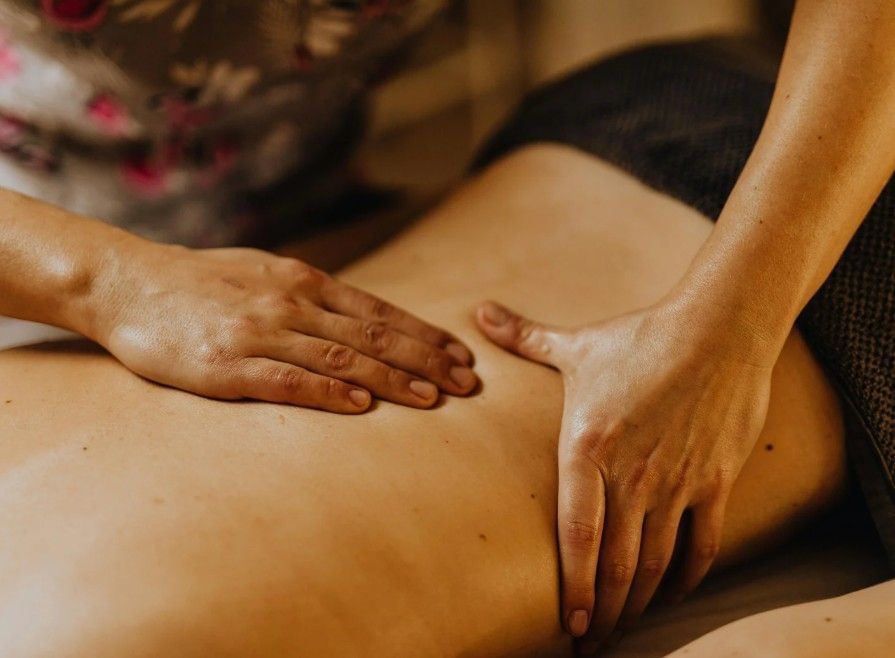
A lower back pain treatment session typically runs for 60 minutes, which provides sufficient time to thoroughly address the lower back, hips, and related areas. You'll lie face down on a heated massage bed – the warmth helps your muscles relax more readily – with appropriate draping so only the area being worked on is exposed. Treatment begins with some broader, warming strokes across the back to increase circulation and prepare the tissue for deeper work.
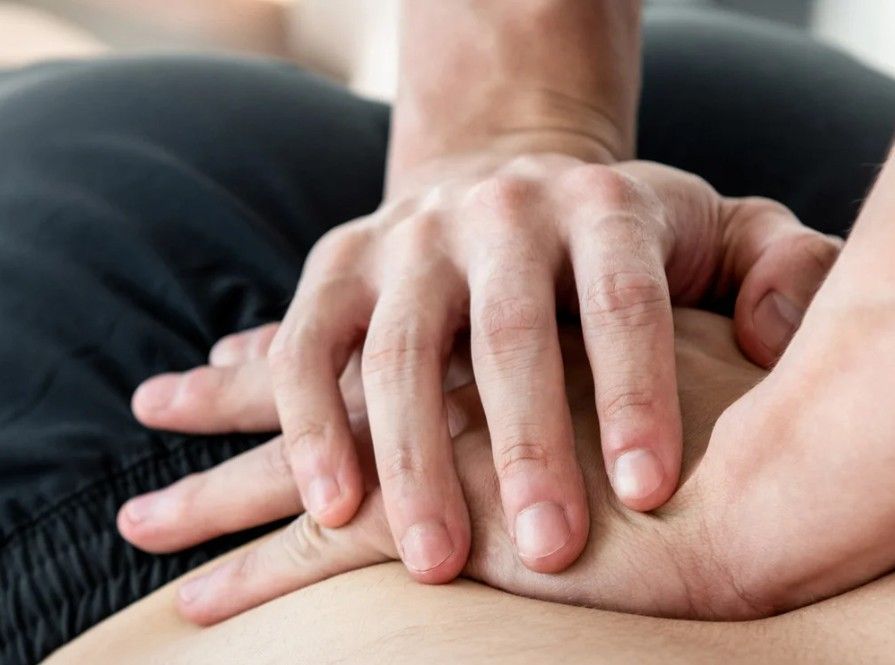
The deep tissue work itself involves slow, deliberate pressure applied along and across the muscle fibres. When I locate trigger points – those specific areas of intense tightness – I'll apply sustained pressure for 30-60 seconds while you breathe deeply. This can feel intense, but it should be tolerable – a "good hurt" rather than sharp pain. The trigger point will often feel like a hard knot under the skin, and you'll feel it gradually soften and release as pressure is maintained. Some trigger points in the lower back refer pain to other areas – you might feel sensations spreading across your back or down into your hip when certain points are pressed, which confirms we've found an active trigger point contributing to your pain pattern.
Work on the quadratus lumborum requires accessing the muscles from the side, working between your lowest ribs and the top of your pelvis. This area often holds tremendous tension, particularly if you work in asymmetrical positions or lift repeatedly on one side. The QL often refers pain across the lower back and down into the hip and buttock, so releasing trigger points here frequently provides relief across a wider area than you'd expect.
Treatment typically includes work on the gluteal muscles (buttocks), because these muscles attach to the pelvis and lower back and are intimately involved in lower back mechanics. Tension in the glutes, particularly trigger points in the gluteus medius on the side of the hip, often contributes to lower back pain even though the pain is felt higher up. Many clients are surprised by how much relief they get from having their glutes treated when their pain is in their lower back, but the interconnection between these areas means you can't effectively treat one without addressing the other.
For office workers in particular, I'll often include work on the hip flexors, which requires you to turn onto your back so I can access the psoas muscle through the abdominal wall. This deep hip flexor attaches directly to the lumbar vertebrae, and when it's tight from prolonged sitting, it creates significant lower back tension. Releasing the psoas often provides immediate improvement in lower back comfort and makes it easier to maintain better posture at your desk.
Realistic Expectations and Treatment Plans
Lower back pain that's been present for months or years won't completely resolve in a single session, although most clients notice some improvement even after their first treatment – typically a reduction in pain intensity, easier movement, or relief in the most problematic areas. The improvement tends to be progressive, with each session building on the previous one as chronic tension patterns are gradually released.
For acute flare-ups of chronic lower back pain – perhaps you've overdone it at work or tweaked something – weekly sessions for 3-4 weeks often provide significant relief. For longer-standing chronic pain, weekly treatment for 4-6 weeks establishes good improvement, followed by fortnightly sessions for a further 4-6 weeks to consolidate the changes. Once you're feeling significantly better, many clients move to monthly maintenance sessions to prevent the tension from building up again, particularly if your work continues to create the same physical demands that caused the problem initially.
It's important to understand that while massage is highly effective for the muscular component of lower back pain, it works best as part of a broader approach. If your work involves heavy lifting, learning proper lifting technique helps prevent the problem from recurring. If you're desk-based, improving your workstation ergonomics and taking regular breaks to move reduces the sustained postural strain. Simple core strengthening exercises help support your lower back so the muscles don't have to work as hard. I'll discuss these factors during your treatment and make practical suggestions based on your specific situation.
Lower Back Pain in Coventry's Working Population
Coventry's economy creates specific patterns of lower back pain across different sectors. The construction boom across the city means hundreds of tradespeople are engaged in physically demanding work daily – lifting, bending, working in awkward positions on new builds and renovations throughout Coventry and Warwickshire. The manufacturing sector that remains employs people in repetitive production work that loads the back consistently. Warehouse and logistics workers serving the distribution centres around the city lift and carry throughout long shifts. Each of these occupational patterns creates specific muscle tension patterns in the lower back.
The city's growing service and office sectors create the opposite problem – too little movement rather than too much. Desk-based workers in Coventry's business parks spend hours in sustained sitting, developing the postural lower back pain that comes from static loading rather than repetitive movement. Healthcare workers in the city's hospitals and care facilities combine awkward movements with patient handling, creating their own particular pattern of lower back strain.
Understanding these local employment patterns helps me tailor treatment to the specific demands your work places on your lower back. A bricklayer's pattern of lower back tension is completely different from an office manager's, and effective treatment addresses these differences rather than using a one-size-fits-all approach.
When to Seek Medical Assessment
While most lower back pain has a muscular component that responds well to massage, certain symptoms suggest you should see your GP before starting massage treatment. If you have pain radiating down your leg below the knee, numbness or tingling in your foot, loss of bowel or bladder control, or if your back pain started after a significant trauma like a fall, these could indicate nerve compression or structural problems that need medical assessment first.
Similarly, if your lower back pain is accompanied by unexplained weight loss, fever, or night sweats, or if you have a history of cancer, these warrant medical investigation. Once serious causes have been ruled out, massage can be very effective for managing the remaining symptoms, and I'm happy to work alongside your GP or physiotherapist as part of your overall treatment plan.
If you're also experiencing sciatica symptoms – pain, numbness, or tingling radiating down your leg – this can sometimes be addressed through massage if it's caused by muscle tension rather than disc problems, but it's worth discussing your specific symptoms to determine whether massage is appropriate or whether you need medical assessment first.
Combining Treatments for Better Results
If you're dealing with persistent pain that's affecting your work, your sleep, or your quality of life, deep tissue massage offers a proven approach to addressing the muscular causes of chronic discomfort. Treatment is tailored specifically to your condition, your pain tolerance, and your goals, whether that's getting back to pain-free work, improving your range of movement, or simply being more comfortable in your daily life.
Sessions are priced at £55 for 60 minutes or £70 for 90 minutes, the same as all massage treatments, regardless of whether you need deep tissue work, sports massage, or a combination of techniques. What matters is addressing your specific needs effectively.
To discuss your particular situation and how deep tissue massage might help, call me on 07557 405718 or complete the contact form with details about the issues you're experiencing. Based in Coventry and available by appointment Monday to Sunday from 8am to 8pm, I've been helping clients manage chronic pain and muscle tension for over 20 years through skilled, professional massage therapy.
Taking the Next Step
If lower back pain is affecting your work, disturbing your sleep, or limiting activities you used to enjoy, targeted deep tissue massage treatment offers an effective way to address the muscular causes of your discomfort. Treatment is tailored specifically to your situation – whether you're managing the physical demands of manual work, the postural strain of desk-based employment, or age-related stiffness that's gradually getting worse.
Sessions are £55 for 60 minutes or £70 for 90 minutes if you have multiple areas needing attention alongside your lower back. To discuss your particular pattern of lower back pain and how treatment might help, call me on 07557 405718 or complete the contact form with details about your symptoms and what you think might be causing them. Based in Coventry and available by appointment Monday to Sunday from 8am to 8pm, I've been helping manual workers, office staff, and retirees manage chronic lower back pain for over 20 years.
Frequently Asked Questions About Lower Back Pain Treatment
How many massage sessions will I need for lower back pain?
For acute flare-ups of chronic lower back pain, most clients experience significant improvement with weekly sessions for 3-4 weeks. For longer-standing chronic pain that's been present for months or years, weekly treatment for 4-6 weeks typically establishes good improvement, followed by fortnightly sessions for a further 4-6 weeks. Once you're feeling substantially better, monthly maintenance sessions help prevent tension building up again, particularly if your work continues to place the same demands on your lower back.
Can massage help if I've had lower back pain for years?
Yes, even chronic lower back pain that's been present for years responds to targeted deep tissue massage treatment. The chronic muscle tension and trigger points that develop over time can be systematically released, although the improvement is usually progressive rather than immediate. Most clients with long-standing lower back pain notice some improvement after their first session, with continued progress over subsequent treatments as deeply held tension patterns gradually release.
Will massage work if painkillers haven't helped my back pain?
Painkillers mask symptoms temporarily without addressing the underlying muscular tension causing your discomfort. Deep tissue massage directly treats the tight muscles, trigger points, and fascial restrictions generating the pain signals, which is why many clients find relief through massage even when painkillers have provided only temporary respite. Treatment releases the physical cause of the pain rather than simply blocking pain signals.
Is massage better than physiotherapy for lower back pain?
Massage and physiotherapy address lower back pain in complementary ways. Massage excels at releasing chronic muscle tension, trigger points, and fascial restrictions, providing immediate relief and improved mobility. Physiotherapy focuses on strengthening, stability, and correcting movement patterns. Many people find the best results come from combining both approaches – massage to release the tight tissue, followed by exercises to strengthen and stabilize. I'm happy to work alongside your physiotherapist as part of your overall treatment plan.
What's causing my lower back pain if I work in an office?
Office-based lower back pain typically develops from prolonged sitting with your spine in flexion – the rounded lower back position most people adopt at desks. This sustained posture keeps the erector spinae muscles stretched and weakened for hours daily. Additionally, the hip flexors shorten from constant sitting, tilting the pelvis forward and increasing load on the lower back muscles. Treatment addresses both the back muscles and the shortened hip flexors to restore better alignment and reduce pain.
Why does my lower back hurt more on one side than the other?
Asymmetrical lower back pain usually indicates you're working or moving in ways that load one side more than the other. If you're a tradesperson who lifts predominantly on one side, carries tools on one hip, or works in asymmetrical positions, the muscles on your dominant working side develop more chronic tension. Office workers who sit twisted toward one screen or who hold their phone between their ear and shoulder also develop asymmetrical tension. Treatment addresses this imbalance by releasing the tighter side and helping restore more balanced muscle function.
Should I continue working if I have lower back pain?
This depends on the severity of your pain and the nature of your work. If you're experiencing sharp, severe pain or pain that radiates down your leg, taking a few days off heavy work may be necessary. However, complete rest usually isn't recommended for muscular lower back pain – gentle movement and modified activity helps more than complete inactivity. During treatment sessions, I'll discuss practical modifications to your work technique and posture that can help you manage symptoms while continuing to work.
Can massage prevent my lower back pain from coming back?
Regular maintenance massage sessions – typically monthly once your initial pain has improved – help prevent chronic tension from building up again, particularly if your work continues to create the same physical demands. Combined with attention to proper lifting technique, workstation ergonomics, and simple core strengthening exercises, maintenance massage significantly reduces the likelihood of your lower back pain returning to previous levels. Many of my manual worker clients schedule regular sessions specifically to prevent problems rather than waiting until pain develops.
What should I avoid doing if I have lower back pain?
Avoid heavy lifting where possible, particularly lifting with a twisted or bent posture. If you must lift, use proper technique with your legs rather than your back. Avoid prolonged sitting without breaks – stand and move for a few minutes every 30-60 minutes if you're desk-based. Don't push through severe pain during physical activity, as this can worsen the problem. After your massage treatment, avoid strenuous activity or heavy lifting for 24 hours to allow your muscles to settle.