
Sciatica Treatment CoventrY
I have a very simply pricing structure for my sciatica massages:
1hr £60
1.5hrs (full body) £75
Package Buy - 5 for price of 4 (valid for 12 months)
Sciatica Treatment
Sciatica is one of the most miserable conditions you can experience – that sharp, shooting pain, burning sensation, or electric shock feeling that travels from your lower back or buttock down through your leg, often accompanied by numbness, tingling, or weakness that makes even simple activities uncomfortable. Unlike general lower back pain which stays localized to your back, sciatica involves irritation or compression of the sciatic nerve itself, the largest nerve in your body, which runs from your lower spine through your buttock and down each leg to your foot.
The crucial question for massage treatment is what's causing your sciatic nerve to be irritated. If the cause is muscular – particularly tight muscles in the hip and buttock compressing the nerve – then targeted
deep tissue massage can be remarkably effective at relieving symptoms. If the cause is a herniated disc, spinal stenosis, or other structural problem in your spine, you'll likely need medical treatment, although massage can still help manage some of the muscular tension that develops secondarily. Understanding the difference is essential for choosing the right treatment approach.


How Sciatica Develops from Muscle Tightness
The sciatic nerve exits your spine in the lower back, passes through or near several deep hip muscles including the piriformis, and travels down through your buttock and leg. When muscles in this region become chronically tight – which happens remarkably easily given how these muscles are used during everyday work and movement – they can compress or irritate the nerve, causing the characteristic radiating pain and altered sensation down your leg.
The piriformis muscle is the most common culprit in muscular sciatica, a condition specifically called piriformis syndrome. This relatively small muscle lies deep in your buttock, running from your sacrum to the top of your thigh bone, and it rotates your hip outward. In most people, the sciatic nerve passes directly beneath the piriformis, though in some anatomical variations, the nerve actually passes through the muscle. When the piriformis becomes tight and inflamed – which happens readily in people who sit for prolonged periods, those who work in positions requiring repeated hip rotation, or following injury to the hip or buttock – it can compress the sciatic nerve against the pelvic bone, causing all the classic symptoms of sciatica.
For manual workers and tradespeople, piriformis tightness often develops from repetitive movements that stress the hip muscles. Climbing ladders repeatedly, working in crouched positions, kneeling for extended periods, or any activity that requires sustained hip rotation or lateral movement can create chronic piriformis tension. Electricians working in loft spaces, plumbers working under sinks and baths, joiners working at various angles and heights, and builders moving across uneven ground throughout the day all commonly develop tight hip muscles that can compress the sciatic nerve. The asymmetrical loading – perhaps climbing ladders primarily with one leg or carrying tools on one side – often means one piriformis becomes significantly tighter than the other.
Office workers develop piriformis syndrome through an entirely different mechanism. Prolonged sitting, particularly with your wallet in your back pocket, places sustained pressure on the piriformis muscle. The hip is held in flexion and internal rotation when sitting, which lengthens the piriformis and can cause it to become both tight and weak over time. Sitting also tightens the hip flexors, which alters pelvic mechanics and changes how load is distributed across the hip muscles, often increasing stress on the piriformis. That numbness or tingling you feel in your leg after sitting at your desk for several hours is often early piriformis syndrome – the muscle is compressing the nerve as you sit.a
Sciatica Treatment near me
If you are looking for a sciatica treatment near me and live in or around Coventry get in touch today.
Other Muscles Contributing to Sciatica Symptoms
While the piriformis receives most attention in muscular sciatica, other deep hip rotators can also compress the nerve. The gemellus superior and inferior, obturator internus, and quadratus femoris all lie in the same region and work alongside the piriformis to control hip rotation. When these muscles develop trigger points or chronic tightness, they can contribute to nerve compression and create sciatica-like symptoms. The gluteus minimus muscle, which lies slightly higher in the buttock, develops trigger points that refer pain down the leg in a pattern that mimics true sciatica, even though they're not directly compressing the nerve.
Understanding these patterns matters because effective treatment requires addressing all the tight structures contributing to your symptoms, not just the piriformis in isolation. The muscles in this region work as a unit, and tension in one affects the others. A comprehensive treatment approach systematically releases the entire group of muscles surrounding the sciatic nerve pathway.
Caitlin
How Deep Tissue Massage Treats Muscular Sciatica
When sciatica is caused by muscle tightness compressing the nerve, deep tissue massage treatment works by systematically releasing the tension in the piriformis and surrounding hip muscles, removing the compression on the nerve and allowing symptoms to resolve. The treatment is targeted and specific, requiring careful palpation to locate the tight muscles and sustained pressure to release them, which is why generic massage or foam rolling often provides only temporary relief while professional treatment delivers more lasting improvement.
Treatment begins with work on the superficial gluteal muscles – the gluteus maximus and medius – which lie over the top of the deeper hip rotators. These muscles need to be released first to allow access to the piriformis beneath. Using slow, deep pressure, I work systematically across the entire buttock area, releasing general tension and identifying specific areas of chronic tightness. Many clients are surprised by how tender their buttock is during initial treatment, which indicates how much chronic tension has accumulated in this region, often without them being consciously aware of it until pressure is applied.
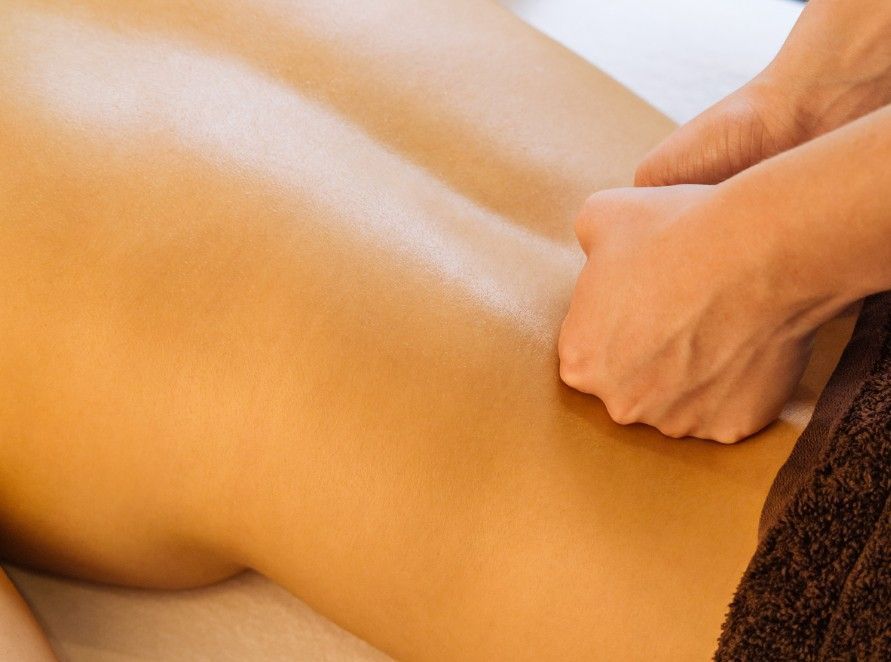
Once the superficial layers are released, treatment focuses specifically on the piriformis. This deep muscle is accessed by working through the gluteal muscles, applying sustained pressure over the belly of the piriformis where it runs across the buttock from the sacrum toward the hip. When pressure reaches the piriformis, particularly if it's in spasm or harboring trigger points, you'll often feel referral sensations – perhaps tingling or warmth spreading down your leg along the sciatic nerve pathway. This confirms we've located the structure compressing your nerve. Sustained pressure for 60-90 seconds, combined with gentle stretching of the muscle, helps release the chronic contraction.
The treatment also addresses the other deep hip rotators that work alongside the piriformis. These muscles are accessed from similar angles, with pressure applied through the gluteal layer to reach the deeper structures. Trigger point therapy is particularly important in this region, because trigger points in the hip rotators often cause referred pain that mimics or exacerbates sciatica symptoms. By systematically releasing these trigger points, the overall load on the sciatic nerve is reduced.
For office workers with sciatica, treatment must also address the hip flexors, because tight hip flexors alter pelvic alignment and change the mechanical load on the hip rotators. The psoas muscle, which attaches to the lumbar spine and runs through the pelvis to attach at the top of the thigh, becomes chronically shortened from prolonged sitting. When tight, it pulls the pelvis into an anterior tilt and internally rotates the hip, which increases stress on the piriformis. Releasing the psoas – which requires you to turn onto your back so I can access the muscle through the abdominal wall – helps restore more neutral pelvic mechanics and reduces the chronic load on the hip rotators.
Treatment Approach and Session Structure
A sciatica treatment session typically runs 60-90 minutes depending on how chronic your symptoms are and how tight the surrounding muscles have become. You'll spend the majority of the session lying face down, with a bolster under your ankles if that makes your leg more comfortable. The heated massage bed helps your muscles relax more readily, which makes the deeper work on the hip muscles more comfortable and more effective.
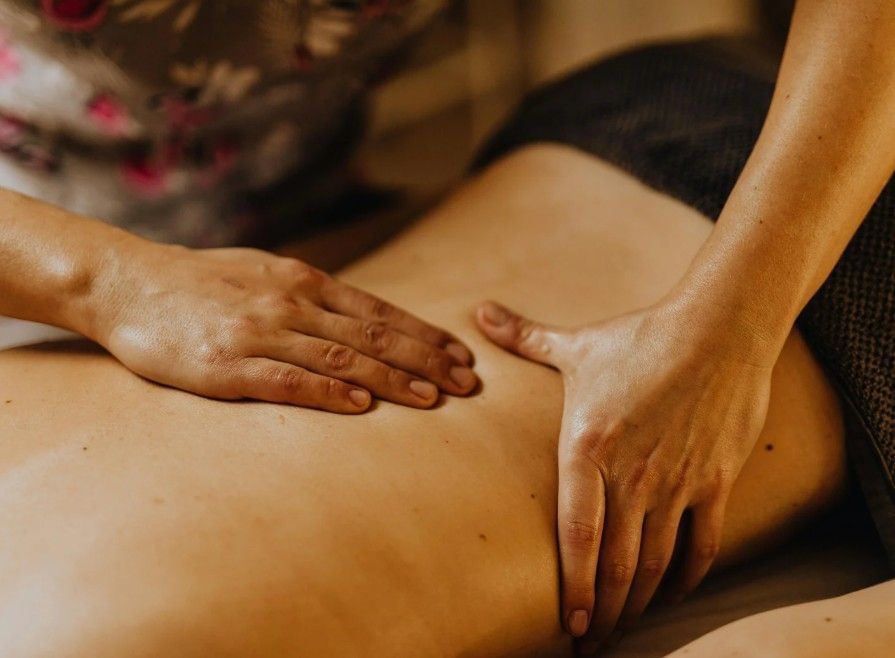
Treatment follows a systematic progression from superficial to deep structures. Beginning with broader work across the lower back to address any tension in the erector spinae and quadratus lumborum muscles – because lower back tension often accompanies sciatica – the focus then moves to the gluteal region. Working through the gluteus maximus and medius with progressively deeper pressure prepares the tissue for the specific work on the piriformis and deep hip rotators.
When I reach the piriformis with sustained pressure, you'll typically feel intense sensation – not sharp pain, but a deep, sometimes almost electric feeling that may spread down your leg. This is actually a positive sign, because it confirms we've located the structure compressing your nerve. The sensation usually subsides within 30-60 seconds as the muscle releases. Some clients describe a feeling of warmth or increased circulation spreading through the buttock and down the leg as the compressed nerve is freed and blood flow improves.
The pressure used must be appropriate to your tolerance. Because the piriformis is a relatively small muscle accessed through the larger gluteal muscles, reaching it requires firm, focused pressure. However, if pressure is too aggressive, you'll tense up defensively, which prevents the muscle from releasing. I constantly check in throughout treatment to ensure the pressure is intense enough to be effective but tolerable enough that you can breathe deeply and allow your muscles to release. Your feedback guides the treatment.
For office workers, the session typically includes 15-20 minutes of work on the hip flexors with you lying on your back. Accessing the psoas requires slow, careful pressure through the abdominal wall, working down from below the ribcage toward the hip bone. This area can be surprisingly tender if the psoas is chronically tight, but releasing it often provides immediate improvement in how your hip feels and can significantly reduce sciatica symptoms by improving pelvic alignment.
Realistic Expectations and Treatment Timeline
Sciatica symptoms that have been present for weeks or months won't typically resolve after a single session, although most clients notice some immediate improvement – perhaps reduced pain intensity, less frequent symptoms, or relief when in certain positions. The nerve has been compressed for some time, and it takes multiple treatments to fully release the chronic muscle tension and allow the nerve to recover.
For relatively recent sciatica – symptoms present for a few weeks to a couple of months – weekly sessions for 4-6 weeks often provide substantial improvement. For longer-standing sciatica that's been troubling you for six months or more, weekly treatment for 6-8 weeks establishes good progress, followed by fortnightly sessions to consolidate the improvement. The response is usually progressive, with each session building on the previous one as the chronic tension in the hip muscles gradually releases.
Some days you'll feel significantly better; others the symptoms may return, particularly if you've spent a long day doing the activities that originally caused the problem. This fluctuation is normal in the early stages of treatment. As the underlying muscle tension resolves over multiple sessions, the good days become more frequent and the bad days less severe, until eventually you're symptom-free most of the time.
It's important to understand that massage works best for muscular sciatica – specifically piriformis syndrome and tension in the deep hip rotators. If your sciatica is caused by a herniated disc compressing the nerve root as it exits your spine, or by spinal stenosis where the spinal canal has narrowed, massage alone is unlikely to resolve your symptoms, although it can help manage some of the secondary muscle tension that develops. If your symptoms include significant leg weakness, loss of bowel or bladder control, or severe pain that's getting progressively worse rather than fluctuating, these warrant medical assessment to rule out serious nerve compression that might require medical or surgical intervention.
Distinguishing Muscular from Structural Sciatica
Certain patterns suggest your sciatica is more likely to be muscular and therefore responsive to massage treatment. If your symptoms are worse with prolonged sitting and ease when you stand and move around, this suggests piriformis involvement. If the pain is primarily in your buttock and upper leg rather than radiating all the way to your foot, this is more consistent with muscular compression. If you can identify specific positions or activities that aggravate your symptoms – perhaps sitting with crossed legs, climbing stairs, or getting in and out of cars – this suggests muscle-related nerve irritation.
Conversely, if your pain radiates below your knee to your foot, if you have numbness in specific areas of your foot or loss of sensation that's constant rather than intermittent, if you have weakness in your foot making it difficult to lift your toes or push up on your toes, or if your symptoms started after a significant back injury or trauma, these patterns suggest nerve root compression from a disc problem or spinal issue that needs medical assessment before pursuing massage treatment.
I'll discuss your specific symptom pattern during your first session, and if I suspect your sciatica has a structural cause that needs medical investigation, I'll recommend you see your GP before proceeding with extensive massage treatment. However, even if you have a confirmed disc problem, massage can still be beneficial for managing the muscular tension that develops as your body compensates for the nerve irritation, and I'm happy to work alongside your GP or physiotherapist as part of your overall management plan.
Self-Care and Prevention
Between treatment sessions, certain self-care measures help maintain improvement and prevent symptoms from flaring up. If you're office-based, taking regular breaks from sitting – standing and walking for 2-3 minutes every 30-60 minutes – prevents the sustained compression on your piriformis that sitting creates. Remove your wallet from your back pocket when sitting. Ensure your chair height allows your hips to be level with or slightly higher than your knees, which reduces hip flexion and stress on the piriformis.
For manual workers whose sciatica relates to repetitive hip movements, paying attention to how you're loading your body helps. If you habitually climb ladders or stairs with the same leading leg, consciously alternating legs distributes the load more evenly. If you carry tools on one side, switching sides periodically prevents one piriformis from becoming chronically tighter than the other. When working in crouched positions, taking brief standing breaks helps prevent the hip muscles from becoming chronically contracted.
Gentle stretching of the piriformis between sessions helps maintain the release achieved during treatment. A simple piriformis stretch involves lying on your back, bending both knees, and placing your affected leg's ankle across the opposite knee, then gently pulling the lower leg toward your chest until you feel a stretch deep in your buttock. Hold for 30 seconds, repeat 3-4 times, several times daily. This stretch should never cause sharp pain down your leg – if it does, reduce the intensity.a
Sciatica in Coventry's Working Population
Coventry's diverse employment sectors create different patterns of sciatica risk. Construction workers, electricians, plumbers, and other tradespeople engaged in the building boom across the city commonly develop piriformis syndrome from the repetitive hip movements, asymmetrical loading, and sustained positions their work requires. Warehouse and logistics workers in the distribution centres around Coventry develop hip muscle tightness from walking on concrete floors for hours and repetitive lifting with rotation.
Office workers in Coventry's growing business services sector face prolonged sitting, often in less-than-ideal ergonomic setups, creating the sustained piriformis compression that leads to sciatica symptoms. Healthcare workers in the city's hospitals combine awkward movements with patient handling, creating stress on the hip muscles from unusual angles and sustained positions.
Understanding these occupational patterns helps tailor treatment to your specific work demands. A joiner's sciatica pattern will differ from a call centre worker's, and effective treatment addresses these differences rather than applying a generic approach. Having worked with clients across Coventry's diverse employment sectors for over 20 years, I understand how different types of work create different patterns of muscle tension contributing to sciatica.
Related Conditions and Combined Treatment
Sciatica rarely exists in isolation – most clients with sciatica also experience some degree of lower back pain, because the mechanical issues causing sciatic nerve compression usually affect the lower back muscles as well. Treatment sessions often need to address both the hip muscles compressing the nerve and the lower back tension that accompanies the condition. This is why 90-minute sessions are often recommended for sciatica treatment, providing sufficient time to thoroughly address both regions.
Some clients find that combining deep tissue work with elements from hot stones massage helps their hip muscles release more readily. The heat from the stones placed on the buttock and hip area before deep tissue work helps the muscles relax, making the deeper pressure more comfortable and more effective. This can be particularly beneficial if your piriformis is extremely tight or if you find the deep work uncomfortable.
For those interested in supporting recovery through nutrition, my nutritional therapy service addresses inflammatory processes that can contribute to nerve irritation and muscle tension. While massage releases the physical compression on the nerve, appropriate nutrition supports nerve health and reduces inflammation that may be exacerbating your symptoms. Some clients find that addressing both the mechanical issue through massage and the inflammatory component through nutrition provides more comprehensive improvement than either approach alone.
Taking the Next Step
If sciatic pain is disrupting your work, affecting your sleep, or preventing you from activities you normally enjoy, targeted deep tissue massage treatment for the muscular causes of sciatica offers an effective approach to relieving your symptoms. Treatment is specifically adapted to your symptom pattern and the underlying cause, whether that's piriformis tightness from physically demanding work, sustained compression from office-based sitting, or age-related changes affecting your hip mobility.
Sessions are £55 for 60 minutes or £70 for 90 minutes – the longer session is often recommended for sciatica to allow time to thoroughly address both the hip muscles and the lower back. To discuss your specific sciatica symptoms and whether massage treatment is appropriate for your situation, call me on 07557 405718 or complete the contact form with details about your symptoms, how long you've had them, and what activities make them worse. Based in Coventry and available by appointment Monday to Sunday from 8am to 8pm, I've been helping manual workers, office staff, and others manage sciatica symptoms through targeted massage therapy for over 20 years.
Frequently Asked Questions About Sciatica Treatment
How can I tell if my leg pain is actually sciatica or just muscle pain?
True sciatica involves the sciatic nerve and typically causes pain that radiates from your lower back or buttock down through your leg, often accompanied by numbness, tingling, or altered sensation along the nerve pathway. Simple muscle pain stays more localized and doesn't create the electric shock sensations or numbness that nerve involvement produces. If your symptoms are worse with prolonged sitting and ease when you stand and move, or if you feel deep buttock pain that spreads down your leg, this suggests sciatica. During your first session, I'll assess your symptom pattern to determine whether your pain is nerve-related or purely muscular.
Will massage cure my sciatica or just provide temporary relief?
For muscular sciatica caused by tight hip muscles compressing the nerve – particularly piriformis syndrome – targeted deep tissue massage can resolve the problem by releasing the chronic muscle tension that's compressing the nerve. This provides lasting relief rather than just temporary symptom management. However, the improvement is progressive over multiple sessions rather than immediate, and if your work or lifestyle continues to create the same muscle tension patterns, maintenance sessions help prevent recurrence. If your sciatica is caused by a herniated disc or spinal stenosis, massage can help manage secondary muscle tension but won't resolve the structural cause.
How many massage sessions will I need before my sciatica improves?
Most clients notice some improvement after their first session – perhaps reduced pain intensity or less frequent symptoms – but complete resolution typically requires multiple treatments. For sciatica that's been present for a few weeks to a couple of months, weekly sessions for 4-6 weeks usually provides substantial improvement. For longer-standing sciatica present for six months or more, weekly treatment for 6-8 weeks establishes good progress, followed by fortnightly sessions to consolidate the improvement. The response varies depending on how chronic your muscle tension is and whether you're able to modify the activities causing the problem.
Is massage painful when treating sciatica?
The deep tissue work on the piriformis and hip muscles involves firm, focused pressure that can feel intense, particularly when I reach the tight muscle compressing your nerve. You may feel a deep ache or even electric sensations spreading down your leg when the piriformis is pressed, which actually confirms we've located the structure causing your symptoms. However, the treatment should never be unbearably painful – you should be able to breathe deeply and allow the muscle to release rather than tensing up defensively. I constantly adjust pressure based on your feedback. Some tenderness in the treated area for 24-48 hours afterwards is normal, similar to post-workout muscle soreness
Can sciatica be prevented if it keeps coming back?
If your sciatica is work-related, certain modifications can significantly reduce recurrence. Office workers should take regular breaks from sitting every 30-60 minutes, remove wallets from back pockets, and ensure their chair height positions hips level with or slightly higher than knees. Manual workers should consciously alternate which leg leads when climbing ladders, switch sides when carrying tools, and take brief standing breaks when working in crouched positions. Regular maintenance massage sessions – typically monthly once your symptoms have improved – help prevent chronic tension building up in the hip muscles. Gentle piriformis stretching between sessions also helps maintain the release achieved during treatment.
Should I see my GP before having massage for sciatica?
If you have severe leg weakness, loss of bowel or bladder control, numbness in your saddle area, constant foot numbness, foot drop, or if your symptoms started after significant trauma, you should see your GP before starting massage treatment as these may indicate serious nerve compression requiring medical intervention. If your symptoms are typical sciatica – buttock pain radiating down your leg that's worse with sitting and eases with movement – you can start with massage treatment directly. However, if your symptoms don't improve after 6-8 weeks of treatment or are getting progressively worse, medical assessment is warranted to rule out structural causes like herniated discs.
What's the difference between sciatica treatment and lower back pain treatment?
Sciatica treatment focuses specifically on releasing the deep hip muscles – particularly the piriformis and other hip rotators – that are compressing the sciatic nerve, causing pain to radiate down your leg. Lower back pain treatment addresses the muscles along the spine and in the lower back region but doesn't involve the same deep hip work. Many people have both conditions simultaneously, which is why 90-minute sessions are often recommended for sciatica – providing time to address both the hip muscles causing nerve compression and the lower back tension that often accompanies the condition.
Why does sitting make my sciatica worse?
Sitting places sustained pressure on the piriformis muscle in your buttock, particularly if you sit with your wallet in your back pocket or sit with poor posture. The hip is held in flexion and internal rotation when sitting, which lengthens the piriformis and can cause it to compress the sciatic nerve that passes beneath or through it. This is why office workers commonly develop piriformis syndrome despite not doing physically demanding work. Standing and moving allows the muscle to contract and relax naturally, relieving pressure on the nerve. Treatment releases the chronic tension in the piriformis, but modifying your sitting habits – taking regular breaks, improving chair height, removing back pocket items – helps prevent the problem recurring.
Can I continue working if I have sciatica?
This depends on the severity of your symptoms and the nature of your work. If you're experiencing manageable pain that's not causing leg weakness or severe mobility problems, continuing work with some modifications is usually better than complete rest. Manual workers might need to avoid the heaviest lifting or most awkward positions temporarily. Office workers should take more frequent breaks from sitting. Complete bed rest typically isn't recommended for sciatica – gentle movement and modified activity helps more than inactivity. During treatment sessions, I'll discuss practical modifications to your work activities that can help you manage symptoms while continuing to work.
Will stretching help my sciatica between massage sessions?
Gentle piriformis stretching between massage sessions helps maintain the release achieved during treatment. A simple stretch involves lying on your back, bending both knees, placing your affected leg's ankle across the opposite knee, then gently pulling the lower leg toward your chest until you feel a stretch deep in your buttock. Hold for 30 seconds, repeat 3-4 times, several times daily. However, stretching should never cause sharp pain down your leg – if it does, reduce the intensity or stop. Stretching works best as a complement to massage treatment rather than as a replacement, because it's difficult to achieve the deep release of the piriformis through stretching alone that sustained pressure during treatment provides.